Oscillators

High-Precision Quartz Oscillators

5–100 MHz

Frequency Range

3

Proprietary, end-user customizable designs

Application Optimized

State-of-the-art Phase Noise

MIL-PRF-55310

Qualification

Product Philosophy

FEI products are deployed as customer-specific configurations derived from proven product platforms. Unlike one-off custom developments, these configurations are built using established architectures, qualified manufacturing processes, and the same rigorous quality, reliability, and test procedures applied across our product portfolio.

FEI designs and manufactures high-performance quartz oscillators for mission-critical aerospace, defense, space, communications, navigation, and critical infrastructure applications. These products provide the precise timing and frequency references required for Assured Positioning, Navigation and Timing (A-PNT), Electronic Warfare (EW), secure communications, radar systems, satellite payloads, and time distribution networks.

For more than six decades, FEI has developed oscillator technologies for some of the world's most demanding operational environments, where accuracy, stability, reliability, and long-term performance are essential. Unlike many suppliers, FEI maintains vertically-integrated manufacturing capabilities that include in-house quartz resonator fabrication, frequency control technologies, and high-reliability production processes, providing exceptional control over product quality, performance, and traceability.

Our oscillator product families combine advanced design, precision manufacturing, and proven operational heritage to deliver exceptional phase noise performance, frequency stability, environmental resilience, and long service life. Available in a range of configurations and performance levels, these products support applications ranging from satellite communications and radar systems to navigation infrastructure, scientific instrumentation, and secure government networks.

Whether deployed as a standard product configuration or adapted to mission-specific requirements, every FEI oscillator is built using proven architectures, qualified manufacturing processes, and the same rigorous engineering and quality standards applied across our aerospace and defense product portfolio.

FEI oscillator product families are available in quartz and rubidium-based configurations supporting precision timing and frequency reference applications across space, defense, aerospace, communications, and navigation systems. Typical performance characteristics may include:

  • 5 MHz and 10 MHz output configurations
  • Low phase noise performance
  • Short-term stability in the 1E-12 range
  • Long-term drift as low as <1E-12 per day
  • Operating temperature ranges from approximately -30°C to +70°C
  • Compact, low-SWaP package options
  • Quartz VCXO and rubidium oscillator architectures
  • G-compensation
  • Configurations suitable for mission-critical timing, synchronization, and frequency reference applications

Final specifications vary by product family, configuration, qualification level, and customer requirements. Final published values should be confirmed by FEI technical marketing and engineering.

Selecting High-Performance Quartz Oscillators for Mission-Critical Systems

Quartz oscillators provide the precise timing and frequency references that enable communications, navigation, radar, synchronization, and measurement systems to operate accurately and reliably.

When selecting an oscillator, engineers must evaluate key performance parameters including phase noise, frequency stability, aging characteristics, environmental resilience, and power consumption. These factors directly influence signal quality, synchronization accuracy, navigation performance, and overall system effectiveness.

FEI develops high-performance quartz oscillator technologies for aerospace, defense, communications, navigation, and space applications where timing integrity and long-term reliability are essential. Through vertically-integrated manufacturing and decades of frequency-control expertise, FEI delivers oscillator solutions designed to perform in demanding operational environments.

Read the full application note

Selecting High-Performance Quartz Oscillators for Mission-Critical Timing Systems

Overview

Modern aerospace, defense, communications, and navigation systems depend on precise timing and frequency references to maintain synchronization, communications integrity, and overall system performance.

Quartz oscillators remain one of the most widely deployed timing technologies due to their combination of frequency stability, low phase noise, reliability, size, power efficiency, and cost-effectiveness. Selecting the appropriate oscillator architecture is a critical design decision that can significantly influence system performance.

This application note provides a high-level overview of key oscillator performance parameters and their impact on mission-critical systems.

Why Oscillator Performance Matters

In many systems, the oscillator serves as the foundational timing reference from which all other frequencies are generated.

Examples include:

  • Satellite communications terminals
  • Radar systems
  • Electronic warfare platforms
  • Navigation systems
  • Timing distribution networks
  • Test and measurement equipment
  • Secure communications infrastructure

Oscillator performance directly influences synchronization accuracy, signal quality, navigation precision, and overall mission effectiveness.

Phase Noise

Phase noise represents short-term frequency fluctuations around the carrier signal.

Low phase noise is important for:

  • Radar target discrimination
  • Electronic warfare systems
  • Satellite communications
  • Frequency synthesis
  • Precision measurement systems

Lower phase noise generally improves signal clarity, receiver performance, and overall system sensitivity.

Frequency Stability

Frequency stability describes how well an oscillator maintains its frequency over time and environmental conditions.

Factors affecting stability include:

  • Temperature variation
  • Aging
  • Input voltage fluctuations
  • Vibration
  • Mechanical stress

Applications such as navigation systems, timing networks, and synchronization architectures often require extremely stable frequency references.

Aging Performance

All oscillators experience some degree of frequency drift over time.

Low-aging designs help:

  • Reduce recalibration requirements
  • Improve long-term synchronization
  • Extend operational life
  • Lower maintenance costs

Long-term stability is especially important in remote, inaccessible, or mission-critical environments.

Environmental Performance

Mission-critical systems frequently operate in challenging conditions.

Designers should evaluate:

  • Operating temperature range
  • Vibration tolerance
  • Acceleration sensitivity
  • Shock resistance
  • Power consumption

Applications in aerospace, defense, and space environments often require oscillator technologies specifically engineered for demanding operational conditions.

Quartz Oscillators in Modern Systems

Quartz oscillators continue to provide an effective balance of:

  • Precision
  • Reliability
  • Size
  • Power consumption
  • Cost

They remain widely used in communications, navigation, radar, synchronization, and instrumentation applications where high-performance frequency references are required.

Frequency Electronics Oscillator Technologies

Frequency Electronics develops high-performance quartz oscillator technologies for mission-critical applications across aerospace, defense, communications, navigation, and space markets.

Capabilities include:

  • Precision quartz oscillators
  • Low phase noise designs
  • Frequency control technologies
  • Synchronization systems
  • Frequency generation architectures
  • Custom and configurable timing solutions

Unlike many suppliers, Frequency Electronics maintains vertically-integrated manufacturing capabilities that include in-house quartz resonator fabrication and frequency control technologies, helping ensure exceptional quality, performance, and reliability.

Conclusion

Selecting the appropriate oscillator technology is a foundational decision for any timing-sensitive system.

By understanding the impact of phase noise, frequency stability, aging, and environmental performance, engineers can make informed decisions that improve system reliability, synchronization accuracy, and mission effectiveness.

For additional technical information, product specifications, or application support, contact Frequency Electronics engineering.

Available Configurations

  • Single Channel
  • Dual Channel
  • Integrated Solutions/Multi-Channel Solutions
  • Modular
  • Plug-In
  • SOSA
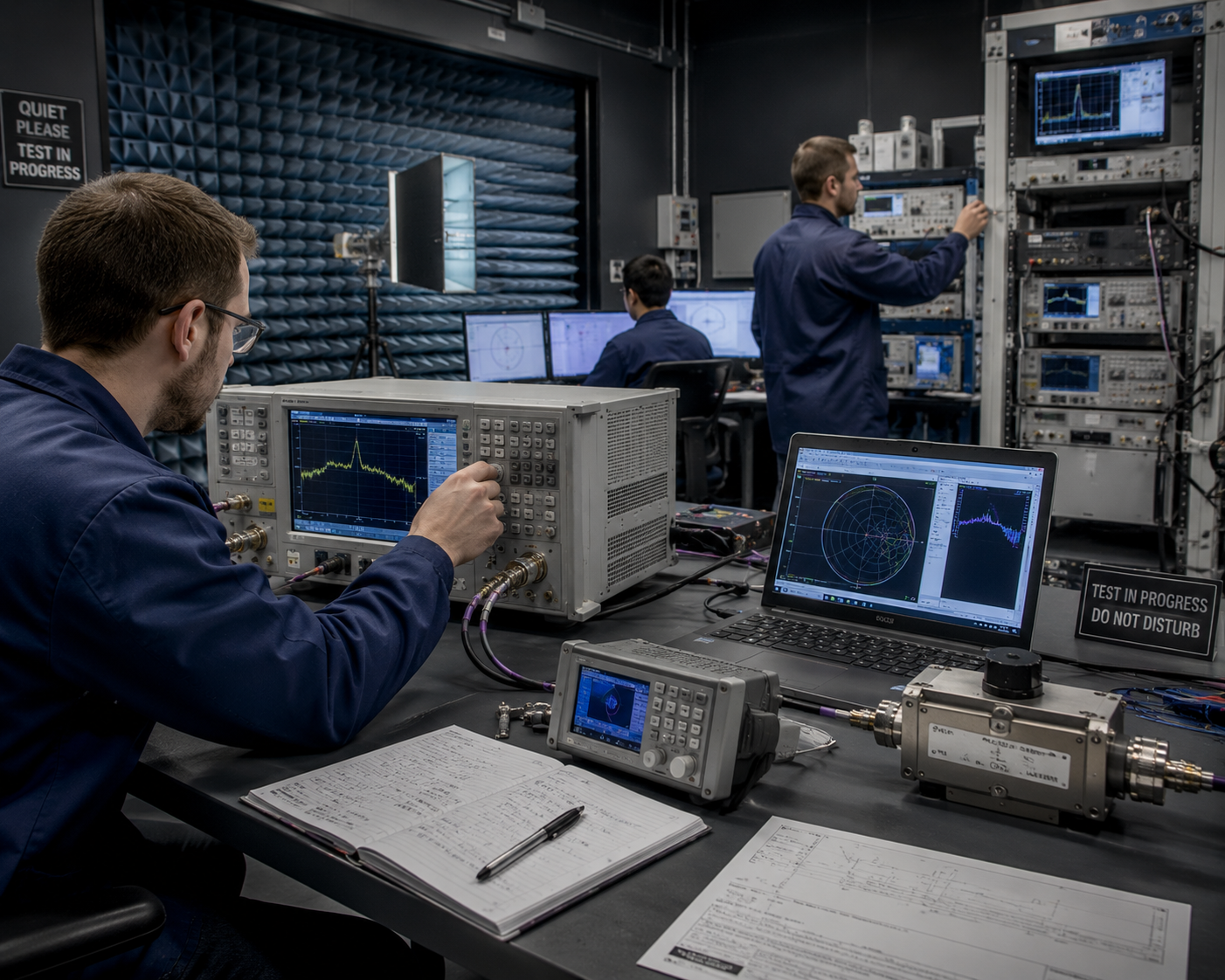
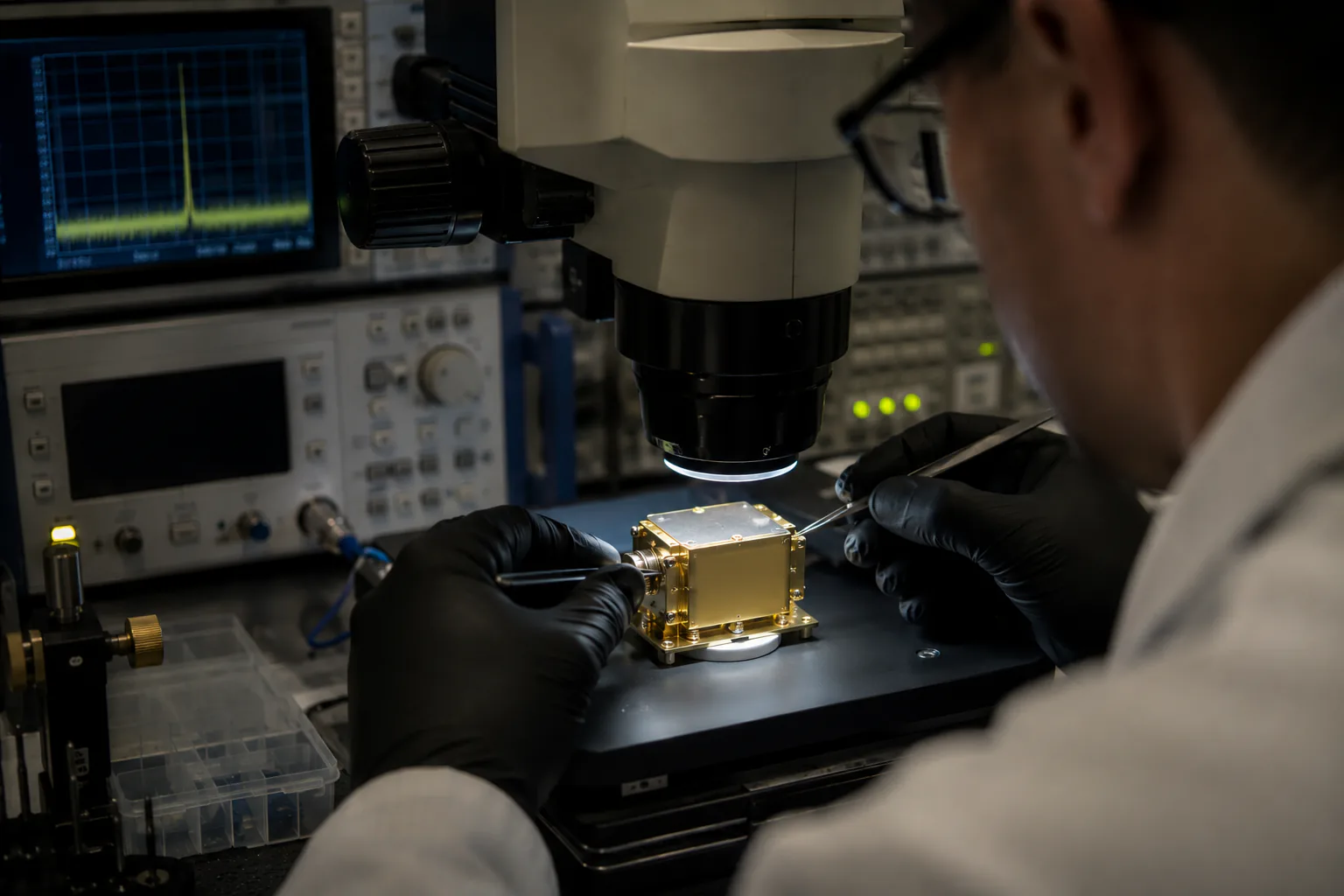
RF engineers characterising phase noise performance on FEI oscillator hardware
01

Oven-Controlled Crystal Oscillators (OCXO)

Ultra-stable OCXOs engineered for defense and communications platforms requiring low phase noise and high frequency accuracy across temperature.

  • State-of-the-art quartz-oscillator phase noise tailored to end use
  • Long-term stability: ±5 ppb over 10 years
  • Rapid warm-up with low aging rate after burn-in
  • MIL-STD-461 and MIL-STD-810 compliant designs
Request Information
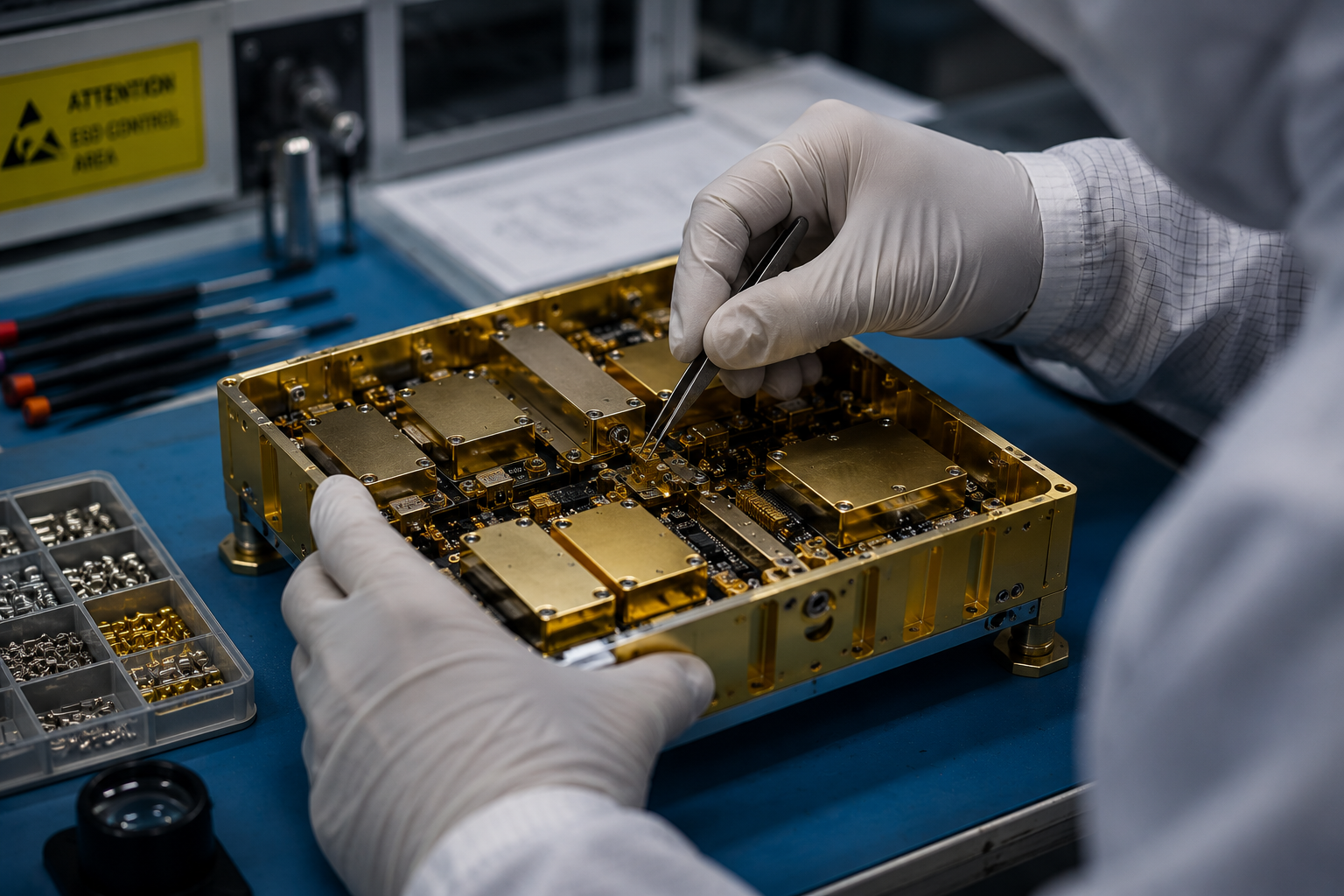
Engineer assembling a Precision quartz oscillator technology component in an ESD-controlled environment
02

Crystal Oscillators (OCXO / VCXO)

Wide range of oven and voltage-controlled designs with MEMs compensation for military-grade communications, radar, and navigation systems.

  • Frequency range: 5–100 MHz
  • Full military temperature range: −55°C to +85°C
  • Low g-sensitivity for airborne and mobile platforms
  • OCXO stability: ±0.5 ppm over military temperature
Request Information
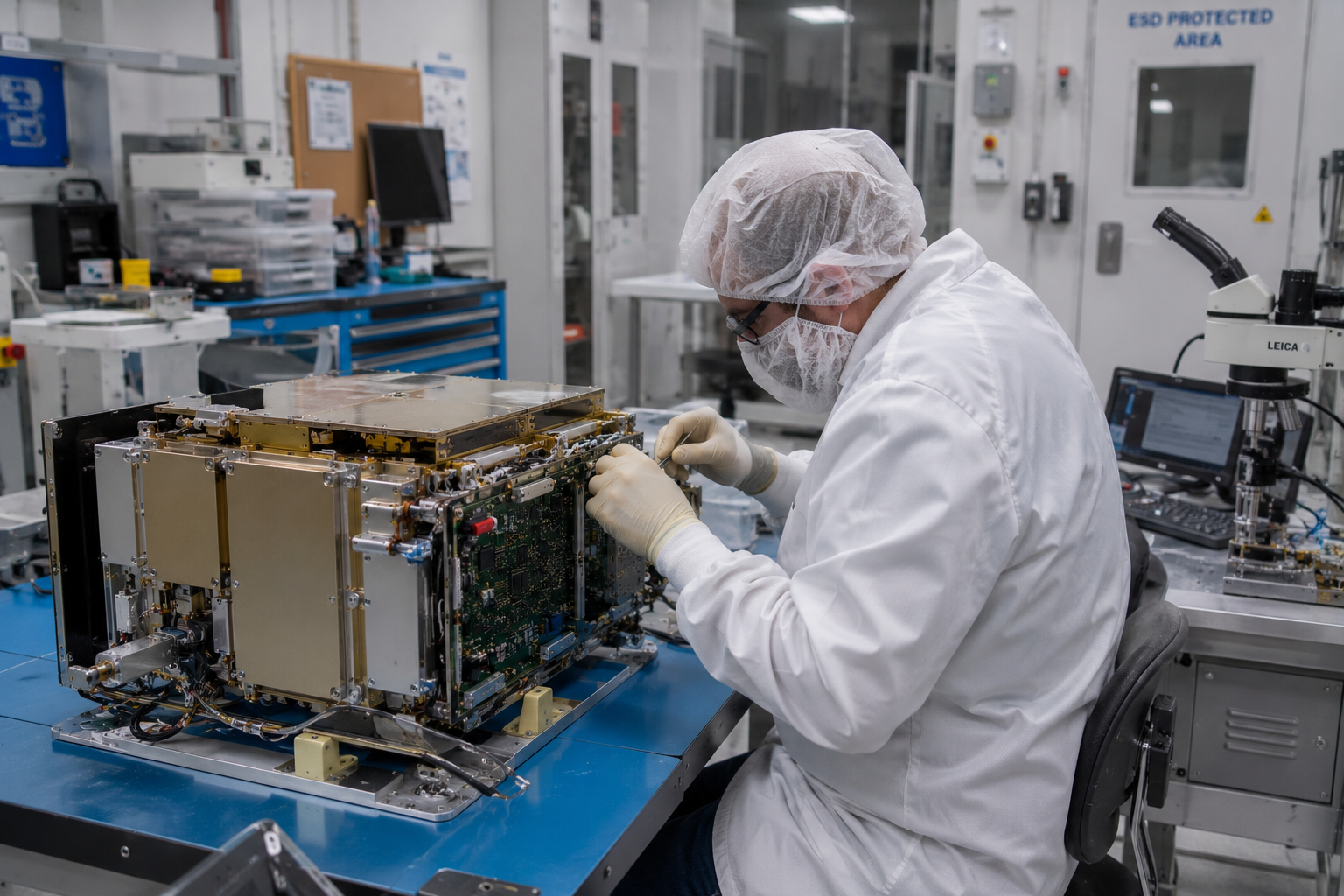
Engineer in ISO cleanroom assembling space-qualified FEI oscillator electronics
03

Space-Qualified Oscillators

Radiation-hardened, high-reliability oscillators qualified per MIL-PRF-55310 for LEO, MEO, and GEO satellite missions.

  • Radiation hardness: >100 krad(Si) total ionizing dose
  • Qualified per MIL-PRF-55310 Class S
  • Proven heritage: >100 satellite missions
  • Radiation pre-conditioning included as part of screening
Request Information

Oscillator Datasheets

Approved FEI product literature for this product family. Download the datasheet you need.

Space Applications

FE-2242 Space-Qualified OCXO

FEI specification for the JPL-qualified FE-2242 oven-controlled crystal oscillator.

Open PDF

FE-4175A Digitally Controlled VCXO

Product datasheet for the FE-4175A 10 MHz digitally controlled VCXO.

Open PDF

FE-2026 Series VCXO

Product datasheet for the FE-2026 Series 5 MHz and 10 MHz voltage-controlled crystal oscillators.

Open PDF

FE-5148 Master Reference OCXO

Product datasheet for the FE-5148 10 MHz master-reference oven-controlled crystal oscillator.

Open PDF

FE-5149 Ultra-Stable OCXO

Product datasheet for the FE-5149 10.24 MHz ultra-stable oven-controlled crystal oscillator.

Open PDF

Terrestrial Applications

FE-141A Active Vibration Compensated OCXO

Product datasheet for the FE-141A vibration-compensated oven-controlled crystal oscillator.

Open PDF

FE-444A Active Vibration Compensated OCXO

Product datasheet for the FE-444A active vibration-compensated oven-controlled crystal oscillator.

Open PDF

SWaP Tradeoffs

Design Considerations

Oscillator performance is inherently influenced by Size, Weight, and Power (SWaP) considerations. As SWaP requirements become more restrictive, design tradeoffs may impact key performance characteristics such as frequency stability, phase noise, power consumption, and environmental resilience. Conversely, larger, higher-power oscillators can deliver enhanced performance for applications where maximum stability and precision are critical. FEI offers a comprehensive range of oscillator solutions spanning the full SWaP spectrum, enabling customers to select the optimal balance between compact, low-power designs and high-performance ultra-stable oscillators (USOs) based on their specific application requirements.

    Application Areas

    Radar & Fire Control

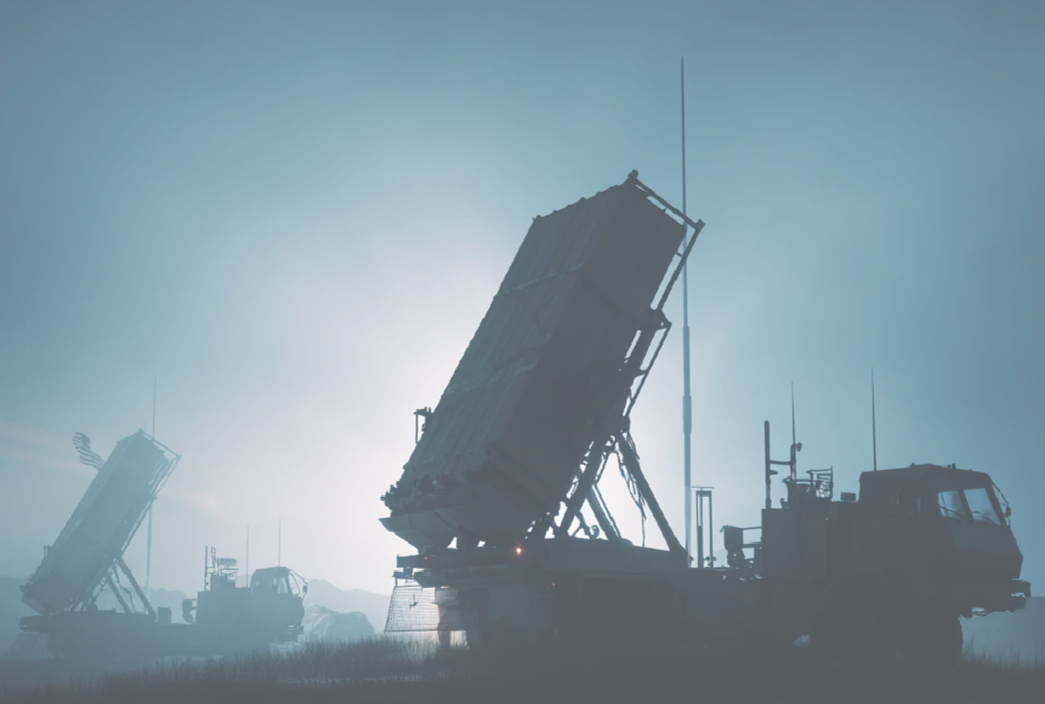
    OCXOs as the coherent frequency source for fire control radar where phase noise directly impacts target velocity resolution and discrimination.

    Satellite & Space Systems

    Radiation-hardened oscillators as secondary clock references, telemetry system sources, and command receiver frequency standards on spacecraft.

    Electronic Warfare (EW)

    Ultra-stable oscillator references for DRFM systems and EW jamming, where frequency accuracy determines the effectiveness of countermeasures.

    Positioning, Navigation & Timing

    High-stability TCXOs and OCXOs in GPS and GNSS receivers for fast signal acquisition and assured PNT accuracy under GPS-denied and high-dynamic conditions.

    Secure Communications

    Low-phase-noise oscillators for encrypted communication downlinks, spread-spectrum modems, and frequency-hopping radios requiring frequency integrity.

    Intelligence Collection

    Precision frequency references for SIGINT and ELINT collection platforms where oscillator stability directly affects signal intercept accuracy and analysis resolution.

    Critical Infrastructure Timing

    Stable oscillator references for power grid synchronization, financial network timestamping, and telecommunications infrastructure requiring long-term autonomous accuracy.

    Test & Measurement

    OCXOs as primary references in spectrum analyzers, signal generators, and vector network analyzers requiring traceable frequency accuracy.

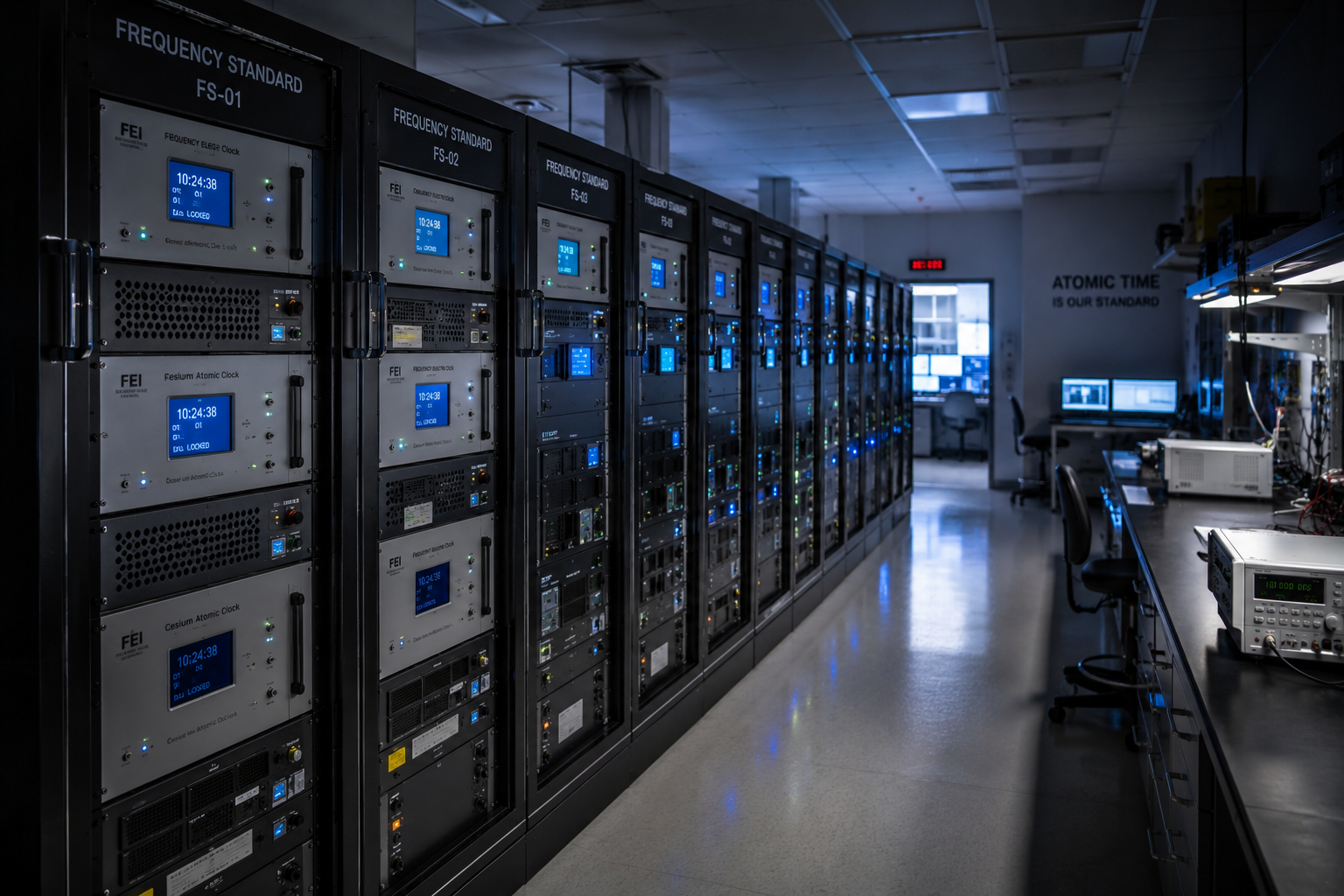
    FEI_WEB_IMAGES_032.png

    FEI-NY

    Precision quartz oscillator technology engineered for the most demanding defense and space applications.

    FEI-NY has manufactured precision quartz oscillators for defense, space, and communications markets since 1961. From ruggedized OCXOs for radar and EW systems to radiation-hardened space-qualified resonators, FEI-NY oscillators deliver the phase noise, stability, and environmental resilience that mission-critical programs demand.

    Uniondale, New York
    patriot-missile - Edited

    Ready to discuss your program requirements?

    FEI engineers are available to consult on custom configurations, integration requirements, and qualification testing for your specific application.